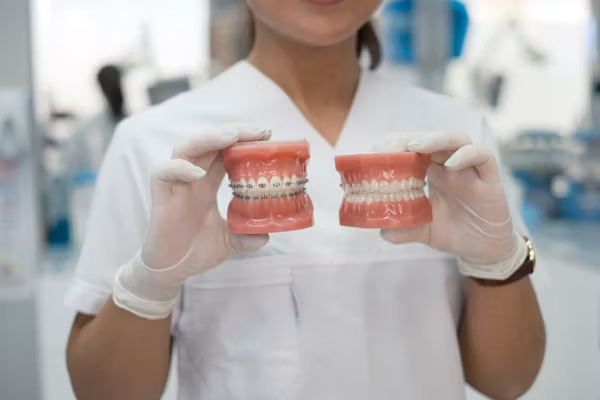
If you're considering orthodontic treatment, you've probably wondered: Should I get traditional braces or clear aligners? Both options can give you a straighter, more confident smile, but they work in very different ways.
In this guide, I'll help you understand the key differences, benefits, and considerations of each option so you can make an informed decision.
What Are Traditional Braces?
Traditional braces consist of metal brackets attached to each tooth, connected by a wire that gently guides teeth into position over time. Modern braces are more comfortable and less noticeable than ever before.
What Are Clear Aligners?
Clear aligners are a series of custom-made, transparent plastic trays that gradually shift teeth into place. They're removable and virtually invisible, making them a popular choice for adults and teens.
Comparison at a Glance
| Feature | Traditional Braces | Clear Aligners |
|---|---|---|
| Visibility | Visible (metal or ceramic) | Nearly invisible |
| Removability | Permanent (fixed) | Removable for eating/cleaning |
| Treatment Time | 18-36 months | 12-24 months |
| Effectiveness | Can treat complex cases | Best for mild to moderate cases |
| Eating Restrictions | Yes — avoid certain foods | None — remove to eat |
| Oral Hygiene | More challenging | Easier — remove to brush/floss |
| Comfort | May cause initial soreness | Generally more comfortable |
| Cost | More affordable | Higher upfront cost |
Pros and Cons of Each Option
Traditional Braces
Pros:
- ✔️ Highly effective for complex cases
- ✔️ Can correct severe misalignments
- ✔️ No need for patient compliance
- ✔️ More affordable than aligners
- ✔️ Ceramic options available for a less visible look
Cons:
- ❌ More noticeable appearance
- ❌ Food restrictions (no sticky or hard foods)
- ❌ More difficult to clean teeth
- ❌ Potential for mouth irritation
Clear Aligners
Pros:
- ✔️ Virtually invisible
- ✔️ Removable for eating and cleaning
- ✔️ More comfortable than braces
- ✔️ Fewer food restrictions
- ✔️ Shorter treatment time for mild cases
Cons:
- ❌ Requires patient discipline (wear 20-22 hours/day)
- ❌ Not suitable for complex cases
- ❌ More expensive than traditional braces
- ❌ Can be lost or damaged
Which Option Is Right for You?
Consider Braces If:
- You have severe overcrowding or misalignment
- You have complex bite issues (overbite, underbite)
- You're not sure you'll wear aligners consistently
- You're looking for a more affordable option
- You want a guaranteed result without relying on daily compliance
Consider Clear Aligners If:
- You have mild to moderate alignment issues
- You want a nearly invisible treatment
- You're comfortable with daily discipline
- You want to eat normally during treatment
- You prefer easier oral hygiene
Frequently Asked Questions
Q: Do braces hurt?
A: You may feel some soreness after adjustments, but it typically subsides within a few days. Over-the-counter pain relievers can help.
Q: Can I eat normally with clear aligners?
A: Yes! Simply remove your aligners before eating and brush your teeth before putting them back in.
Q: How often do I need to wear my aligners?
A: For the best results, wear your aligners 20-22 hours per day, removing them only for eating, drinking (except water), and brushing.
Q: Which option is faster?
A: Clear aligners can often be faster for mild to moderate cases. However, braces are sometimes faster for complex cases.
My Professional Recommendation
Both traditional braces and clear aligners have transformed countless smiles. The right choice depends on your specific needs, lifestyle, and preferences.
Ready to start your smile transformation? Book a consultation today and let's find the perfect orthodontic solution for you.
← Back to Blog